
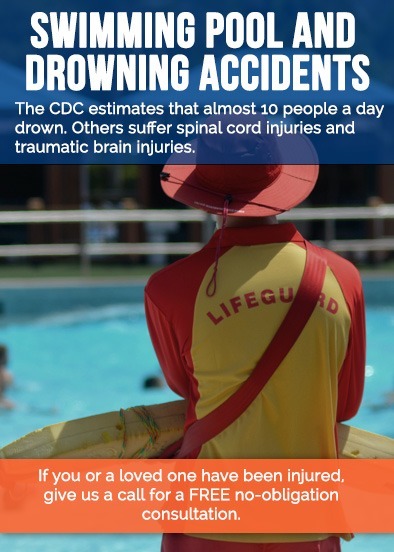
Swimming pool accidents can happen to anyone, leaving you with significant injuries that are hard to recover from. In some scenarios, they may even lead to wrongful death. By hiring a swimming pool accident lawyer in Atlanta, you can pursue the compensation you deserve.
Here in Atlanta, with our long, muggy summers, we spend a lot of time in the water in our numerous public and residential pools. But in a split second, a life can be changed drastically.
As a local law firm that’s been closely involved with the Georgia community since 1999, John Foy & Associates understands the unique challenges Atlanta families face after a swimming pool accident. Our Atlanta personal injury lawyers can help you understand what your legal options are and provide ongoing guidance throughout the claims process.
What You Should Do If You or Your Loved One Has Been Injured in a Swimming Pool Accident
The first thing you should do is call 911. If the accident involved drowning and you know CPR, do what you can to help the victim as you wait for the emergency responders to arrive.
Once everyone is safe, try to document what happened. Identify the pool owner, property owner, or business responsible for the pool and ask for their name, contact information, insurance details, and anything else that may help when taking legal action. You should also get the contact details of any witnesses.
If possible, take photographs of the pool area, surrounding conditions, warning signs, barriers, gates, drains, ladders, or other hazards that may have contributed to the incident. Then contact a swimming pool accident lawyer from John Foy & Associates. We’ll provide the advice and guidance needed to file a compensation claim.



What Are the Most Common Swimming Pool Accidents?
According to the Centers for Disease Control and Prevention (CDC), drowning is a leading cause of unintentional injury death in the United States, with more than 4,000 fatal unintentional drownings each year. Drowning is the leading cause of death for children ages 1 to 4, and most drownings in this age group happen in swimming pools.
For every child who dies from drowning, several more are treated in emergency rooms for nonfatal drowning injuries, which can cause long-term harm such as brain damage.
After more than 25 years of practicing law in Atlanta, John Foy & Associates has supported a wide range of clients suffering from life-changing injuries. Here are some of the most common types of pool-related accidents we’ve seen:
- Drowning/near-drowning accidents
- Diving accidents, especially when diving into shallow water
- Slip and fall accidents on pool decks
- Drain or pool entrapment
- Accidents caused by lifeguard negligence
- Accidents caused by defective pool equipment
These accidents can happen at backyard pools, apartment communities in Buckhead, Midtown, and Sandy Springs, neighborhood HOA pools, and public pools throughout Atlanta. Regardless of the location or the cause, we can help you hold the at-fault party financially responsible.
What Responsibilities Do Homeowners Have Regarding Pool Safety?
In Georgia, homeowners have a range of responsibilities when it comes to owning a pool. A permanent barrier that meets state building requirements must surround the pool, with fencing being at least four feet high.
If a home forms part of the pool barrier, doors providing direct access to the pool may need to have an appropriate alarm or other safety features. Proper lighting can also improve visibility around the pool and help reduce the risk of accidents, particularly at night.
You should also review your homeowner’s insurance coverage to understand whether your pool has adequate liability coverage.
Atlanta Roots, Nationwide Reach.
Distance is no obstacle. We work with clients across the country and make sure every one of them feels taken care of, no matter how far the call travels.
What If a Water-Related Accident Happened at a Friend or Neighbor’s Home?
Tragically, many pool accidents occur at a friend’s home. At John Foy & Associates, we understand that pursuing a compensation claim can feel especially difficult when the person responsible for the pool is someone you know and care about.
Our goal is to approach these situations with compassion and sensitivity while helping your family pursue damages for the cost of associated medical bills and other expenses.
“The only person you really cannot sue in a personal injury claim is your spouse,” says firm founder John Foy. “Personal injury claims are already complicated matters, but a claim against a neighbor, relative, or friend requires a delicate balance. Our firm works hard to be sensitive and professional while we work your claim.”
Do Commercial Pools Have Different Safety Requirements?
Yes, commercial and public swimming pools may be subject to additional safety requirements beyond those that apply to private residential pools. For example, a business owner must have appropriate signage, certified lifeguards, fencing and barriers, regular pool maintenance, and more.
If you were injured at a hotel, public pool, or a water park like Six Flags White Water, we can help determine whether the facility followed applicable safety requirements. If we find that the facility’s negligence created the dangerous conditions that contributed to your accident, we’ll look at avenues for pursuing compensation against them.
Swimming Pool Accident Lawyer in Atlanta FAQs
We care about providing answers to the questions you have regarding Georgia laws. Here are some of the most common queries we get about swimming pool accidents:
How Does Premises Liability Apply to Swimming Pool Accidents?
Many swimming pool accident claims in Georgia involve premises liability. Under O.C.G.A. § 51-3-1, property owners and occupiers generally have a duty to keep their premises reasonably safe for people who are legally on the property.
If they fail to address a dangerous situation or hazardous condition and it contributes to a pool-related accident, the property owner or occupier may be held liable for any injuries caused.
When Does Georgia’s Attractive Nuisance Doctrine Apply?
Georgia’s attractive nuisance doctrine may apply when a dangerous condition on private property is likely to attract children who may not understand the risk. For example, they may be tempted to jump into a swimming pool without permission or supervision if there are no barriers in place to stop them.
If your child was injured after accessing a pool on someone else’s property, an attorney can review the circumstances to determine whether Georgia’s attractive nuisance doctrine or premises liability laws may apply.
What Is the Deadline for Filing a Swimming Pool Accident Lawsuit?
Usually, the statute of limitations for personal injury lawsuits in Georgia is two years from the accident, but there are some exceptions where the time period may be much shorter.
Because our Atlanta swimming pool accident attorneys will take care of the entire claims process for you, we’ll make sure you never miss a deadline when it comes to filing your claim. Reach out to a member of our team to learn more about how Georgia laws may impact your case and how we can help.
Schedule a Free Consultation with an Atlanta Swimming Pool Accident Attorney
“We focus 100% of our energy on helping and fighting for injured people,” says firm founder John Foy.
A swimming pool accident can be traumatic for everyone involved. If negligence has contributed to your injuries and you want to claim compensation from the liable party, John Foy & Associates can help you pursue a fair settlement.
We’ll review the evidence, determine liability, estimate damages, and handle all negotiations with the insurance company on your behalf. That way, you can concentrate on recovering from this difficult situation. Get The Strong Arm™ in Georgia. Book a free consultation with our attorneys today to get started on your claim.
 April 30 2026





 100% Confidential
 No Fees Unless We Win
 24/7 Support