

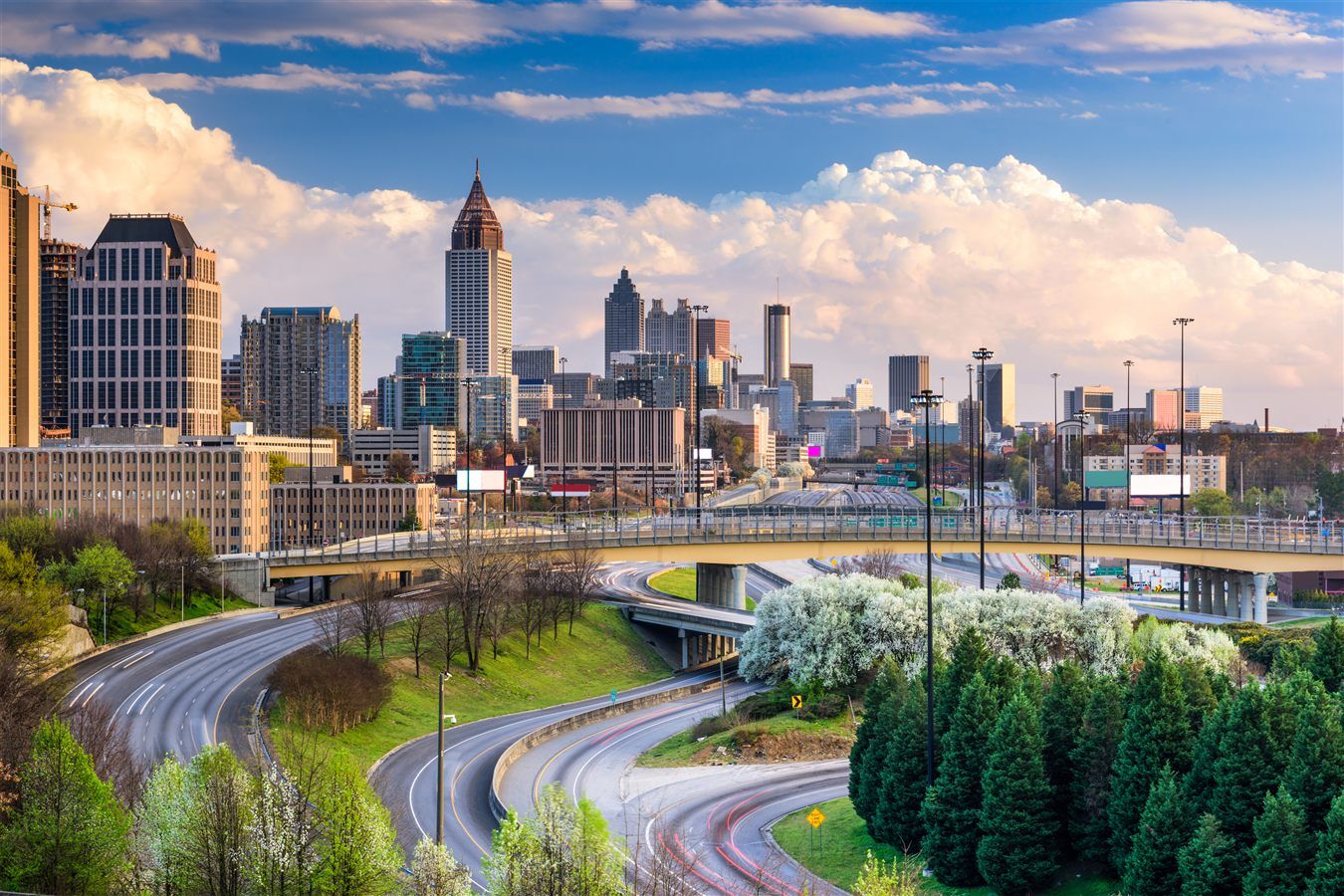
A serious highway crash can leave you dealing with injuries, medical bills, vehicle damage, and time away from work. An Atlanta personal injury lawyer can investigate what caused the collision and determine who may be responsible.
At John Foy & Associates, we give injured clients individual attention throughout the claims process. Highway cases can become complicated, especially when several drivers, commercial vehicles, and insurers are involved.
A highway accident lawyer in Atlanta can gather evidence, deal with the insurance companies involved, and help you understand what compensation may be available.
Why Are Atlanta Highway Accidents So Complicated?
Atlanta highway crashes are complicated because they often happen at higher speeds and can involve several vehicles before surrounding drivers have time to react.
One driver may make an unsafe lane change, another may be following too closely, and several other vehicles can then become part of the same collision.
An Atlanta highway accident lawyer can review each driver’s actions and determine whether a company or government entity may also share responsibility under Georgia law.


Which Atlanta Highways See Serious Crashes?
Several major corridors regularly appear in Atlanta traffic reports and crash investigations, including I-285, I-85, I-20, and GA-400.
I-285 and the Perimeter
I-285 carries large amounts of commuter and commercial traffic around the metro area.
Reporting based on Georgia Department of Transportation (GDOT) data in 2024 identified the I-285/GA-400 interchange as a particularly crash-prone part of the Perimeter.
Heavy merging and weaving can contribute to rear-end crashes, sideswipe collisions, and multi-vehicle accidents, especially when traffic suddenly slows around major interchanges.
I-85 Through Atlanta
I-85 runs through the northeast side of the metro area before joining I-75 on the Downtown Connector.
A May 2024 multi-vehicle crash on I-85 South entering Midtown blocked every southbound lane for more than an hour.
Crashes along this corridor can involve drivers changing lanes in heavy traffic, following too closely, speeding, or failing to react when congestion develops ahead.
I-20 East and West
I-20 crosses Atlanta from east to west and carries both passenger and commercial traffic.
In October 2024, Atlanta police investigated a wrong-way crash near Hamilton E. Holmes Drive that involved several vehicles and caused serious injuries.
Wrong-way driving, impaired driving, unsafe lane changes, and drivers approaching stopped traffic too quickly can all turn an I-20 collision into a multi-vehicle accident.
GA-400
GA-400 connects Atlanta with communities to the north and feeds into I-85 and I-285.
Atlanta police investigated a fatal rollover near I-85 in May 2024 and another fatal wrong-way crash near Lenox Road later that year.
These incidents do not mean every part of GA-400 is unsafe, but they show how serious a high-speed collision can become when drivers have little time to react.
How Is Fault Determined in a Multi-Vehicle Highway Accident?
Fault is not automatically assigned to the driver involved in the final impact.
Investigators may work backward through the crash to determine what started the sequence. One driver might have cut across several lanes while another was speeding or following too closely.
Evidence may include:
- Police reports and diagrams
- Witness statements
- Traffic camera or dashcam footage
- Vehicle damage
- Event data recorder information
- Tire marks and debris
- Phone records when distracted driving is suspected
Looking at the Entire Chain of Events
In a chain-reaction crash, several drivers can make separate mistakes within seconds of each other.
For example, one driver may brake suddenly after missing an exit, a second may be following too closely, and another may change lanes to avoid the first impact. Each action can become relevant when responsibility is divided.
An Atlanta highway crash lawyer from John Foy & Associates can review the entire sequence rather than focusing only on which vehicle struck another last.
When Several Parties Share Fault
Georgia law allows responsibility to be divided when more than one person’s conduct contributed to an injury.
That can include several drivers, a commercial vehicle company, or another party whose actions played a role in the collision.
This is why a multi-vehicle car accident claim often requires more investigation than a straightforward two-car crash.
Atlanta Roots, Nationwide Reach.
Distance is no obstacle. We work with clients across the country and make sure every one of them feels taken care of, no matter how far the call travels.
Georgia’s Comparative Negligence Rule
Georgia follows a modified comparative negligence system.
Under Georgia Code § 51-12-33, your compensation can be reduced according to your percentage of fault.
If you are found 50% or more responsible, you generally cannot recover damages.
What Happens if You Share Some of the Fault?
Being partly responsible does not automatically prevent you from bringing a claim. For example, another driver might have made an unsafe lane change while you were traveling too fast for the conditions. Both actions could become part of the fault analysis.
If you are less than 50% at fault, your damages will be reduced by your percentage of responsibility. If you are 50% or more responsible, you cannot recover damages.
Can GDOT Be Responsible for a Dangerous Highway Condition?
Sometimes road conditions contribute to a highway accident. In this situation, GDOT or another government entity may be responsible.
Damaged pavement, drainage problems, missing signs, broken barriers, debris, or another roadway issue may raise questions about the agency responsible for maintaining the highway.
A claim involving the Georgia Department of Transportation is different from an ordinary negligence claim against another motorist.
Why GDOT Maintenance Records Matter
Maintenance records may show whether a dangerous condition had previously been reported, inspected, or scheduled for repair.
Relevant records can include:
- Maintenance logs
- Work orders
- Inspection records
- Earlier complaints
- Repair histories
- Incident reports
- Engineering records
Those documents may help establish what GDOT knew about the condition and whether anything was done before the crash occurred.
Road Defect Claims Can Be Complicated
Not every dangerous road condition creates liability.
Georgia’s Tort Claims Act includes rules that can limit claims against the state, particularly where road design, inspections, or discretionary government decisions are involved.
The facts matter. A failure to carry out required maintenance can raise different issues from a challenge to the original design of a highway.
Special Notice Requirements
Claims against the state can also have separate ante litem notice requirements.
That means someone who believes a road defect contributed to a crash should not assume the ordinary personal injury deadline is the only deadline that matters.
For a claim against the State of Georgia or GDOT, the Georgia Tort Claims Act generally requires ante litem notice within 12 months of the loss. Different deadlines can apply if a city or county is the responsible entity, so the correct deadline depends on which government entity is involved.
Getting the road condition issue reviewed early can also make it easier to request maintenance and inspection records while they are still available.
Evidence Should Be Preserved Quickly
Important evidence can disappear long before a lawsuit deadline arrives.
Traffic footage may be overwritten, damaged vehicles may be repaired, and witnesses can become harder to locate. An insurer or commercial company may also begin investigating almost immediately.
That makes early preservation especially important after a serious highway collision.
Black Box and Vehicle Data
Many modern vehicles contain an event data recorder, often called a black box.
Depending on the vehicle, it may store information about speed, braking, acceleration, seat-belt use, or other activity shortly before impact.
That information can be useful when drivers disagree about whether someone braked, accelerated, or was traveling too quickly before the collision.
Traffic Cameras and Dashcams
Traffic camera footage, dashcams, nearby surveillance systems, and sometimes recordings from commercial vehicles may show how the crash developed.
Video can be particularly useful in sideswipe collisions, unsafe lane-change claims, or multi-vehicle accidents where each driver gives a different account.
Because footage is not necessarily stored forever, requests may need to be made quickly.
Witness Statements
Independent witnesses may have seen parts of the crash that the drivers could not.
Their statements can help establish lane positions, traffic conditions, speeding, aggressive driving, or what happened immediately before the first impact.
At John Foy & Associates, we can identify evidence that may need to be preserved before it becomes unavailable.
What Should You Do After an Atlanta Highway Accident?
After an Atlanta highway accident, your health comes first. If you are injured or develop symptoms, get appropriate medical treatment. If it is safe to do so, preserve basic information about the crash before the scene changes.
Other useful steps include:
- Calling law enforcement and getting the police report information
- Photographing the vehicles, debris, and road conditions
- Exchanging insurance and contact details
- Getting witness contact information
- Saving dashcam or other electronic footage
- Keeping medical records, bills, prescriptions, and repair estimates
- Keeping records showing lost income or time away from work
You should also be cautious about detailed recorded statements or social media posts while the claim is pending.
What Causes Highway Accidents in Atlanta?
Common causes of Atlanta highway accidents include:
- Distracted driving
- Aggressive driving or road rage
- Speeding
- Impaired driving
- Unsafe lane changes
- Following too closely
- Driver fatigue
- Vehicle defects
- Road debris or damaged pavement
- Poor visibility or severe weather
More than one of these factors can contribute to the same traffic collision.
An investigation should look at what happened before the impact, rather than assuming one obvious event tells the whole story.
What Injuries Can Highway Accidents Cause?
High-speed auto accidents can cause injuries ranging from temporary strains to permanent disabilities.
Common injuries include traumatic brain injuries, spinal cord injuries, broken bones, internal injuries, burns, soft-tissue injuries, and damage to the neck or back.
Some symptoms may not appear immediately after the collision.
Medical records can help document when symptoms developed, what treatment you received, and whether your injuries continue to affect your daily life or ability to work.
What Compensation Can You Recover After a Highway Accident?
An Atlanta highway accident claim may include both economic damages and non-economic damages.
Economic Damages
Economic damages cover financial losses that can usually be documented with records.
They may include:
- Medical bills
- Future medical treatment
- Lost wages and lost income
- Reduced earning capacity
- Vehicle repair costs
- Other accident-related expenses
Bills, employment records, medical records, and repair estimates can help establish these losses.
Non-Economic Damages
Non-economic damages address losses that do not have a simple invoice attached to them.
They may include pain and suffering, disability, emotional effects, and changes to your normal activities.
There is no standard amount for these damages. The value depends on how the injuries have affected the individual accident victim.
Punitive Damages
Punitive damages are different from compensation for ordinary losses.
They are only available when the defendant’s conduct meets Georgia’s separate legal requirements for particularly serious misconduct.
A standard negligence case will not automatically support punitive damages.
Commercial Truck Highway Accidents in Atlanta
Truck accidents can involve additional records and potentially responsible parties.
The truck driver may be responsible, but the carrier, employer, maintenance provider, loading company, or another business could also become relevant.
An Atlanta truck accident lawyer from John Foy & Associates can review driver logs, maintenance records, electronic data, and company information.
Preserving those records quickly can be especially important after a serious commercial vehicle collision.
Insurance Disputes
An insurance dispute can involve fault, injury severity, property damage, or which policy should pay.
When several vehicles are involved, more than one policy may need to be reviewed.
UM/UIM coverage may also become relevant if the at-fault driver has no insurance or does not have enough coverage for the losses involved.
An Atlanta highway injury lawyer can review the applicable policies and respond to issues raised by an insurance company.
How Our Atlanta Highway Accident Attorneys Can Help
A highway accident case may involve several drivers, insurance companies, commercial vehicles, or questions about road maintenance.
At John Foy & Associates, we can investigate the crash, gather available records, identify potentially responsible parties, and document your losses.
We can also deal with insurance adjusters while keeping you informed about what is happening with your claim.
Investigating the Accident
We may review police reports, witness statements, vehicle data, photographs, traffic camera footage, and medical records.
In multi-vehicle accidents, we can look at the whole sequence of events rather than only the final impact.
That can help determine whether responsibility should be divided among several drivers or other parties.
Handling the Insurance Claim
We can communicate with insurers, provide supporting records, and review settlement offers with you.
If negotiations do not resolve the claim, filing a lawsuit may be another option, depending on the evidence and applicable deadlines.
We can explain those options as the case develops so you understand what comes next.
Why Choose John Foy & Associates?
John Foy & Associates was founded in 1999 and brings 350 years of combined legal experience across the firm.
We have recovered more than $1 billion for clients and intentionally keep our caseload manageable so clients can receive individual attention.
Past results do not guarantee what will happen in another claim.
How Much Does a Highway Accident Lawyer Cost?
John Foy & Associates handles personal injury cases on a contingency fee basis.
You do not pay lawyer fees upfront. The fee is agreed upon before representation begins and comes from the recovery if the case is successfully resolved.
We also offer a free consultation so you can discuss the crash and learn more about your options.
Talk to a Highway Accident Lawyer in Atlanta
A highway accident can become complicated quickly. A highway accident attorney in Atlanta at John Foy & Associates can investigate the collision, determine which parties may share responsibility, and explain which losses may be recoverable.
Contact John Foy & Associates for a free consultation about your highway accident claim.

 June 12 2026


 100% Confidential


