
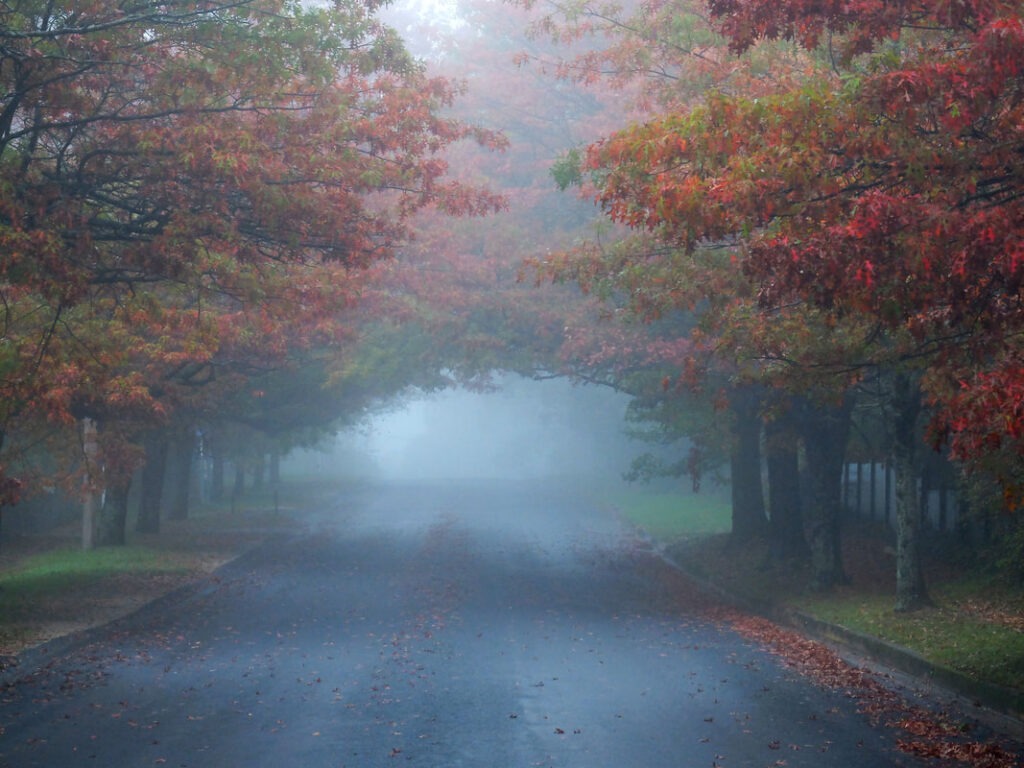
Yes, fall foliage season increases car accident risks in Georgia. Wet leaves make roads slicker, falling leaves can block your view of signs and signals, deer are more active, and scenic routes draw out-of-town drivers who are busy looking at the view instead of the road.
None of these risks is new, but they stack on top of each other for a few weeks each year. From mid-October through November, Georgia drivers deal with all of them at once, especially in the North Georgia mountains.
The Atlanta car accident lawyers at John Foy & Associates see a steady rise in fall crash cases from the Blue Ridge Mountains down through metro Atlanta. If a seasonal hazard played a role in your wreck, John Foy & Associates can help you figure out who’s responsible.
Wet Leaves Create Hazards Similar to Black Ice
A pile of wet leaves on asphalt behaves a lot like a patch of ice. Rain soaks into fallen leaves and turns them into a slick, compressed layer that tires can’t grip. Add a layer of morning dew or frost, and the surface gets even more dangerous. This can be particularly risky on:
- Curvy mountain roads with heavy tree cover
- Shaded residential streets that stay wet longer
- Bridges and overpasses that cool off faster than open road
- Intersections where leaves pile up near the curb
Drivers often don’t realize they’ve lost traction until they’re already sliding. Braking distances increase, and a car that would normally stop in time can skid straight through a stop sign or into the car ahead.



Falling Leaves Can Block Your View of the Road
Leaves don’t just end up on the ground. During peak color season, they can obscure lane markings, cover storm drains, and pile up around road signs and traffic signals. A stop sign half-covered by a maple branch is easy to miss, especially for drivers unfamiliar with the area.
Falling leaves themselves can also distract or momentarily blind a driver, particularly on windy days when leaves blow across the windshield or swirl in front of headlights at dusk.
Deer Season Peaks in October and November
Deer are one of the biggest reasons fall foliage season increases car accident risks in Georgia. According to AAA press reports, Georgia sees roughly 50,000 deer-vehicle collisions every year, accounting for nearly 14% of all traffic crashes statewide.
Those collisions spike sharply during the autumn “rut,” or mating season, which runs from mid-October through late November according to peak movement tracking by the Georgia Department of Natural Resources (DNR).
The end of Daylight Saving Time compounds the risk, shifting evening commutes into darkness right as deer activity reaches its daily peak. Historical federal crash data from the NHTSA Fatality Analysis Reporting System (FARS) shows October is the single peak month for fatal animal crashes in Georgia, with nearly 70% of fatal animal collisions occurring after dark.
Who’s Liable in a Multi-Vehicle Deer Crash?
Deer strikes get complicated when more than one car is involved. A typical scenario: a driver swerves or brakes hard to avoid a deer, and the car behind rear-ends them. Here’s generally how fault breaks down:
- The driver who hit the deer usually isn’t liable to others unless they were speeding, distracted, or driving recklessly before the swerve.
- The following driver is often held responsible if they were following too closely to react safely, since Georgia law requires drivers to keep a safe distance.
- If a third car gets pulled into the chain reaction, fault can spread across multiple drivers depending on speed, distance, and reaction time.
Because these cases often come down to who was following too closely or driving too fast for conditions, they’re worth having a lawyer sort out early.
Atlanta Roots, Nationwide Reach.
Distance is no obstacle. We work with clients across the country and make sure every one of them feels taken care of, no matter how far the call travels.
Scenic Routes Bring Distracted Drivers
Scenic drives are another way fall foliage season raises car accident risks across Georgia. Georgia’s fall color draws heavy traffic to routes like the Blue Ridge Mountains, Dahlonega, and Cloudland Canyon. Visitors driving unfamiliar, winding roads while trying to catch a view of the foliage are a recipe for distracted driving. Common issues on these routes include:
- Drivers slowing suddenly to look at scenery or take photos
- Rubbernecking near scenic overlooks and pull-offs
- Unfamiliar drivers missing sharp curves or sudden elevation changes
- Heavier-than-normal weekend traffic on two-lane roads with few passing opportunities
The risk is especially pronounced in North Georgia mountain corridors like GA-400 and US-19, where leaf-peeping tourism puts unfamiliar drivers on narrow roads at the same time deer activity is climbing. Combine that with wet leaves and low afternoon sun glare through the trees, and these routes see more crashes during peak color weeks than almost any other time of year.
What to Do After a Fall Car Accident in Georgia
If you’re in a crash during leaf season, a few steps protect your health and your claim:
- Call 911 and get medical attention, even for injuries that seem minor
- Take photos of the road surface, leaves, skid marks, and vehicle damage
- Note the weather, lighting, and whether a deer or scenic distraction was involved
- Get contact information from any witnesses nearby
- Avoid admitting fault at the scene, since conditions like wet leaves can shift blame
Talk to John Foy & Associates Today
Seasonal hazards don’t excuse a driver from acting carefully, and insurance companies will still look for ways to blame weather or wildlife instead of paying your claim.
If you’re wondering whether fall foliage season increased the car accident risks behind your wreck in Georgia, John Foy & Associates can help you find out. Contact us today for a free consultation. You pay nothing unless we win.
 100% Confidential
 No Fees Unless We Win
 24/7 Support

